The infamous Latin political maxim “exitus acta probat”, often attributed to Niccolò Machiavelli, is translated as “the outcome justifies the deed”, although Machiavelli never wrote it. It comes from Ovid’s Heroides, a collection of letters written by mythological women to the men who abandoned them. This one is from Phyllis to Demophon. Phyllis is a Thracian princess; Demophon is the son of the Athenian king Theseus. He arrives in Thrace after the Trojan War, and the two fall in love. He promises to marry her, but he has to return to Athens first. He swears he will come back. But he does not return. Phyllis waits and waits, her countrymen mocking her for choosing a foreigner, and eventually she dies of grief. And it is Phyllis herself who shouts this maxim at the laughing crowd, “[you say] the outcome justifies the deed; I pray he lack success, whoever thinks deeds should be judged by their result.” In her mouth, the maxim is an accusation and a curse, spoken by the woman who bears the cost of her choices. Fifteen centuries later, a political manifesto has made this phrase a license for authoritarian rule.
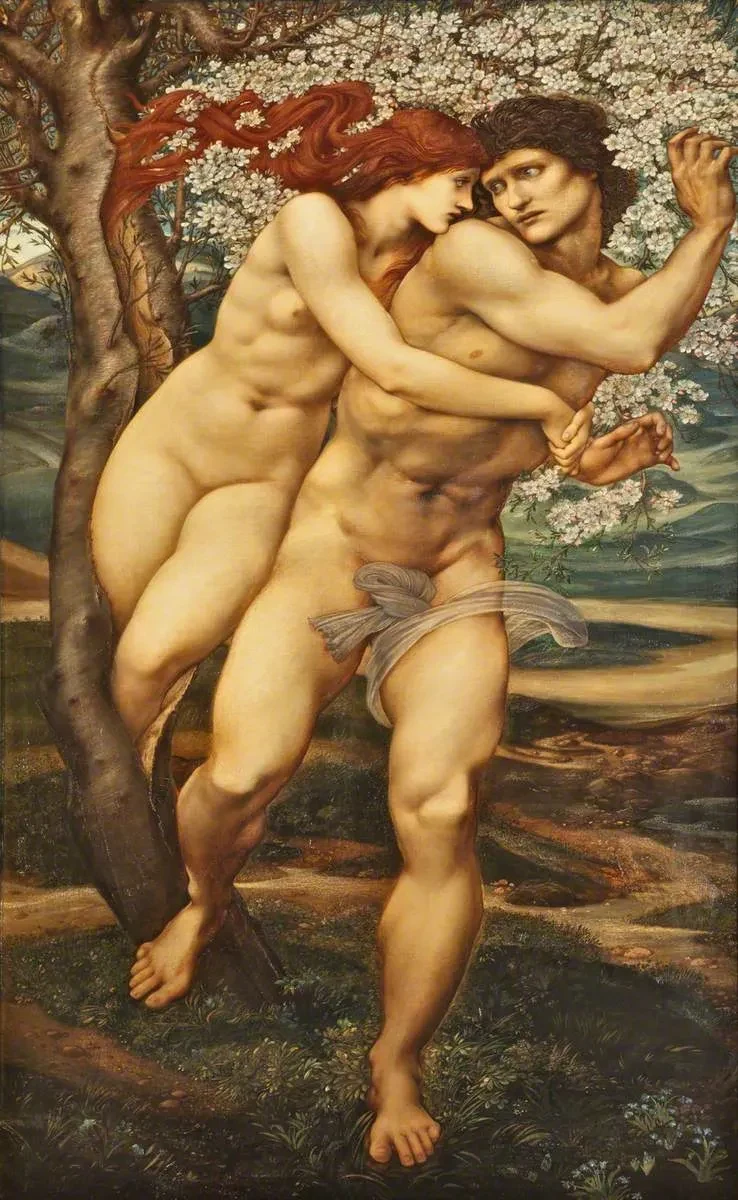
I have been thinking a lot about this phrase since watching Christopher Nolan’s The Odyssey. Odysseus triumphs in the great war by turning a sacred gesture against his enemies. The wooden horse is left as a votive offering to Athena, with an inscription dedicating it to her, and this is why the Trojans take it inside: at the time, refusing a gift to a god was unthinkable. The means Odysseus chose were not only deception but desecration. He made the Trojans' piety his weapon. He wins the great battle. For that, his soul is broken, all his friends are dead, and he arrives back in a world shaped by what he has done.
Wars throughout history have been waged on the strength of this maxim, which retrospectively justifies violence in the name of some ultimate good. Our political leaders ask us to look beyond the destruction of cities, industries, and human lives, and instead to prioritize a greater vision. Often, the ultimate goal stated by politicians is a more stable and just world. To me, there is a hidden message in what the word “justifies” implies, because to justify something is not merely to explain the reason for it, but rather to bestow moral legitimacy upon it. It examines our capacity to morally transform harm when we believe it serves a greater good. So, this is my attempt to examine whether it is acceptable (justified) to cause suffering to some if the outcome may alleviate a much greater proportion of suffering.
A familiar illustration of this dilemma is the famous thought experiment known as the Trolley Problem. The constructed situation forces a participant to choose between killing an innocent person intentionally, thereby saving the lives of five others, or doing nothing, seemingly absolving them of responsibility but thereby ensuring all five die instead. This moral impasse is presented to highlight the conflict between different moral intuitions. It rests on the assumption that ends and means can be morally separated, and it asks whether the morality of an action lies in what it does or in its outcome. But what we call an end is often only a temporary point in a chain of consequences, while the means used to reach it become part of the reality they were intended to transform.
A different non-hypothetical example is Harry Harlow’s torture of baby Rhesus monkeys, which contributed to our understanding of attachment, social development, and the importance of a nurturing environment for children. This was a real study that advanced the field of childhood psychology. So, was the anguish and likely permanent psychological damage caused to the baby monkeys justified by Harlow’s ultimate contributions? Can one hold oneself to the model of being a good person while at the same time doing cruel things in the name of progress? What complicates the defense of Harlow’s contribution is that his evidence was not entirely new. René Spitz had documented the collapse of institutionalized infants in the 1940s, and John Bowlby had delivered his report on maternal deprivation to the World Health Organization in 1951, years before the monkeys. What Harlow supplied was not the new finding but its unignorability. So the justification of his actions actually shifts from “we could not have known otherwise” to “we would not listen otherwise.” The necessity for this cruelty was not in the circumstances of events but rather in society’s refusal to listen.
In The Gulag Archipelago, Aleksandr Solzhenitsyn wrote about years spent in Stalin’s gulag. Shakespeare’s villains, he writes, stopped short at a dozen corpses because they had no ideology. Macbeth’s self-justifications were feeble, and his conscience devoured him. What the twentieth century added was not cruelty, which is ancient, but justification, which allows cruelty to be carried out on a scale of millions by men who slept soundly. To do evil, he writes, a human being must first convince himself that what he is doing is good. Putin in today’s Russia, like his predecessor, no doubt believes the same.
Political realism begins with the proposition that politics operates under different constraints from private morality because of the sheer number of people politics affects, and because a leader acts as a trustee for his people, who themselves have no say in the stakes. Political leaders often face decisions in which every available option causes harm to some. When the preservation of the state is on the balance, its leader is asked to make decisions that would otherwise be considered immoral. This is when “necessity” becomes the bridge between an undesirable means and a desirable political end.
The idea’s origin has become so closely linked with Machiavelli that he is a great place to begin our examination. A 16th-century Florentine diplomat and writer, Machiavelli authored, among other works, The Prince, which explored the balance between ethics and politics. In the popular reading of the book, he appears to be giving political leaders justification for deploying all sorts of means, honorable or wicked, to whatever extent necessary to attain their political objectives.
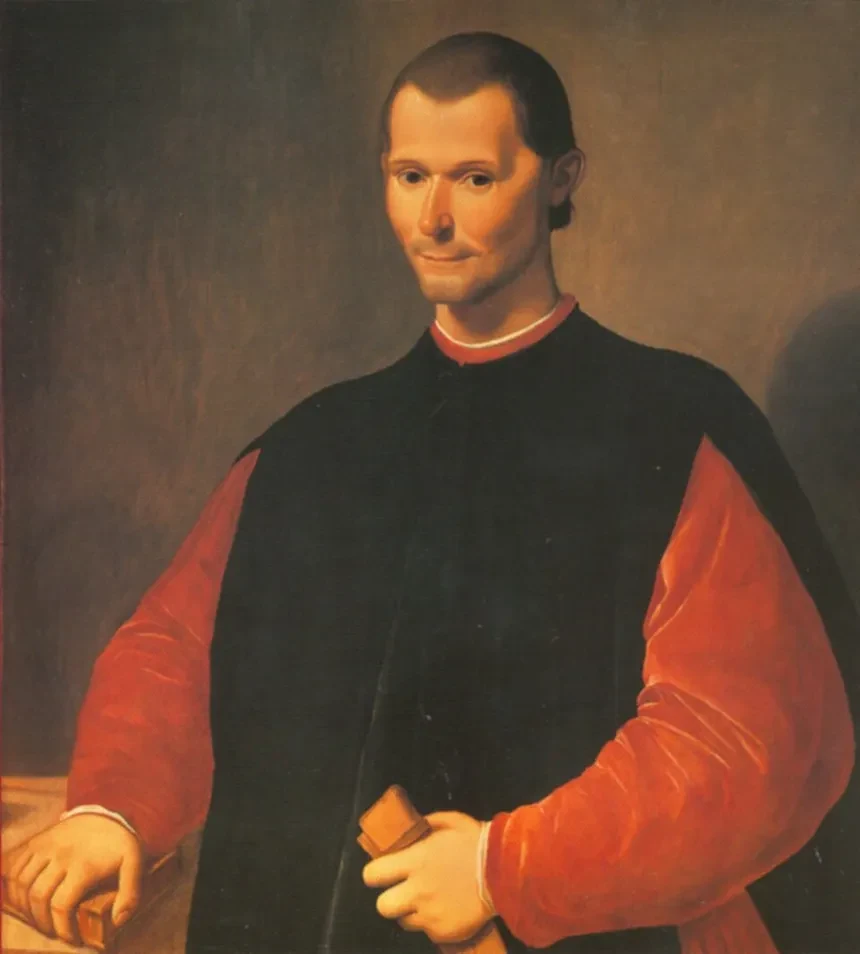
This raises the next logical question: who gets to decide when “necessity” enters the picture, thereby making someone the sacrificial lamb? In other words, whose suffering and how much of it is acceptable? Who receives the benefit and under what criteria? How long does the sacrifice last, and when do we know it is over? In the popular understanding of The Prince, Machiavelli seems to provide such guidelines as “well-used cruelty,” which is taken to mean cruelty that is strategic and limited, like to secure one’s position, rather than cruelty for its own sake as a habitual tool that self-perpetuates, which will then ultimately undermine political stability.
Yet this interpretation may itself be one of the greatest misunderstandings surrounding The Prince, and it is precisely what the historian Erica Benner and others who came before her ask us to question. Benner points us to an even greater device than what we had conceived The Prince to be about all along. She asks whether Machiavelli is teaching rulers how to use cruelty strategically, or whether he is teaching readers the internal logic and ultimate weakness of rulers who believe they can do so.
For context, in 1512, the Medici government ejected Machiavelli from the civil service posts he’d held for nearly fifteen years, then imprisoned and tortured him on suspicion of plotting to overthrow the principality. He was released the following spring under a general amnesty and wrote his most notorious work over the year that followed. The prince, Lorenzo di Piero de' Medici, to whom the slender volume was dedicated, was a young man with tyrannical leanings. Machiavelli’s aim wasn’t just to flatter his way into his favor: he had a more sinister purpose. As Benner reports it, his design 'was to write for a tyrant those things that are pleasing to tyrants, bringing about in this way, if he could, the tyrant’s self-willed and swift downfall'. The book’s most shocking advice, rather, its sleight of hand, was exactly what Machiavelli thought would resonate most with dictators, yet also expose them as such. He points the reader to the twisted logic by which a ruler convinces themselves that the destruction of their enemies is necessary and just. Benner asserts that Machiavelli wore the mask of a helpful adviser while setting a trap within his own advice, hoping to ensnare rulers and drag them to their ruin.
Long before Benner, Jean-Jacques Rousseau, in The Social Contract (1762), had this same analysis. He observed that “under the pretext of teaching kings, he [Machiavelli] has taught important lessons to the peoples. Machiavelli’s The Prince is the book of republicans,” Rousseau declared. He goes further, when saying that Machiavelli “had to disguise his love of liberty,” and that it would serve a greater purpose if we read The Prince “upside down.” In the same footnote, Rousseau gives his evidence: “the contrast between the maxims of his book The Prince and those of his Discourses and of his History of Florence shows that this profound political theorist has until now had only superficial or corrupt readers.” Rousseau’s and Benner’s point is that The Prince is the outlier of Machiavelli’s writings. The Discourses and the Florentine Histories are much longer, slower books, and in them Machiavelli spends his time defending the rule of law against corrupt popes and tyrants and arguing that moral standards should be upheld rather than lowered to fit the gritty realities of political life. Benner adds that the eye-catching maxims we remember him for, like “better to be feared than loved,” are not where his convictions lived. They are there, she writes, “to get under the reader’s skin: to irritate, to provoke, to make us think and think again about the examples he sets before us.”
It must be said that this reading has never been settled. Harvey Mansfield, who taught government at Harvard for six decades and translated both The Prince and The Discourses into English, thinks Machiavelli meant every word quite straightforwardly. Mansfield is adamant that Machiavelli knew exactly what he was doing when he broke with Christian and classical ethics, thereby founding modern politics. His objection to readings like Benner’s is that they are a way of making Machiavelli comfortable, an “anodyne rehabilitation” that lets us admire him without facing what he actually wrote. Mansfield also has an answer to Rousseau: the contradiction between the books is not really one, he points out, because Machiavelli’s republicanism is itself ruthless, and the Discourses advise republics to do cruel things too.
Mansfield is right about the texts. The Discourses is not a gentle book; Machiavelli repeatedly treats the elimination of conspirators and internal enemies as legitimate when necessary to preserve the state. His discussion of Brutus having his own sons executed after they conspired to restore the monarchy is particularly brutal. But for Machiavelli, it is about who he thought should be allowed to authorize cruelty. In the Discourses, the harshness runs through the law and can be revoked by the people who live under that law. In The Prince, the same act is done by one man, for his own security, answerable to no one, and terminated when he says so.
In his own lifetime, Machiavelli was not known as a political theorist at all, and neither The Prince nor the Discourses appeared in print before his death in 1527. Machiavelli was known for his play Mandragola, a blistering satire of corrupt morals in Florence. He was a playwright, practiced at assuming voices and personas, at putting things in a character’s mouth that he could not say himself. Benner’s Machiavelli is a man of masks who was nonetheless, as his closest friends knew, the least likely to compromise what he believed. None of this is proof, but it does mean that the straight reading of Mansfield must assume that one of Florence’s most practiced ironists decided to stop being ironic in the one book we remember him by.
It is fascinating to see when the misinterpretation took hold. Sixty years after the publication of The Prince, the English stage took Machiavelli at face value and made a monster of him. Christopher Marlowe, a playwright writing at the same time as Shakespeare, opens The Jew of Malta with a prologue spoken by a villain called Machevill, who declares that he counts religion a “childish toy and says that there is no sin but ignorance”. Shakespeare’s Richard of Gloucester casts himself as a Machiavel on hyperdrive, boasting that he will “set the murderous Machiavel to school.” But Shakespeare’s characters rarely lie in a simple, declarative way. They use implication, omission, strategic ambiguity, and carefully chosen truths to make other people construct the lie themselves. Richard tells the audience one thing while telling the other characters something else.
This is closer to what The Prince does than to what its reputation has become. In his book, Machiavelli argues that a successful ruler must know how to appear virtuous while keeping the ability to act otherwise when circumstances demand it. His fox-and-lion formulation is infamous: “It is necessary to be a fox to discover the snares and a lion to terrify the wolves.” And then he unpacks that idea for the reader in case they missed the metaphor. “A prince,” he says, “should seem merciful, faithful, humane, religious, and upright, while being prepared to act contrary to all of those qualities when necessity requires it.”
The obvious difference between the most celebrated playwright in history and Machiavelli is that Shakespeare exposes the psychology of deception while Machiavelli analyzes its political utility, which appears more dangerous. But that is only true if we read The Prince straight. Read the other way, Machiavelli is doing exactly what Richard does in soliloquy: saying one thing to the characters on stage and another to the people watching. Why do we recognize this doublespeak in Shakespeare but not in Machiavelli?
Machiavelli must be interpreted as speaking on two levels simultaneously. On the surface, he gives instructions on how a prince can acquire and hold onto power. But underneath, he asks the reader to look carefully at what this kind of politics actually requires and notice its perversities. To achieve this hidden communication, like Shakespeare, Machiavelli continually plays with language, using familiar moral vocabulary and flipping its conventional meaning, such as “virtù,” which does not mean “virtue.” Machiavelli’s virtù is something like political capacity, strength, adaptability, courage, intelligence, and effectiveness. It is not simply “being virtuous.” Its intended audience isn’t a prince as a manual to manipulate his people; rather, it is for the wider public, as instructions on how political power operates, including the tricks by which rulers persuade themselves and others that their actions are necessary and ultimately good.
What was new in what Machiavelli did, and probably why it became the rallying cry for tyrants, was not the idea that cruelty could serve greater ends. It was that he put it in a book whose entire genre existed to counsel princes toward virtue. The scandal was formal, and this is what has made the popular interpretations of The Prince, and, by extension, its author, so enduring. Its superficial ideas have evolved into today’s “raison d’état”, putting national interest over the personal and very much echoing the ideals of liberals and conservatives today.
Your weakness is my security.
One of the valuable contributions of Machiavelli to Rousseau’s The Social Contract is that Machiavelli reveals that in reality, “the people’s force is their force”; therefore, the ruler can only be strong if his people are “weak and miserable and incapable of ever resisting.” In The Prince, the ruler is instructed to weaken and divide society, all while claiming he wants to make life better for all his citizens. But this is the doublespeak again: when a ruler, a dictator, says to his people, “Your strength is my strength,” he is actually saying, “Your weakness is my security.”
There is another important point Rousseau makes about Machiavelli’s works, and it echoes the question I asked earlier about how it is decided when “necessity” enters the picture. The real question, Rousseau suggests, is who gets to define peace? His answer is that “rulers destroy at will, and where they make a desert, they call it peace.” That line is not Rousseau’s own. It belongs to Tacitus, a Roman historian and senator writing about his own empire, and it comes from a speech delivered by Calgacus, a Caledonian chieftain rallying his men before a battle against the Romans. Like Machiavelli and Shakespeare, Tacitus uses doublespeak, fourteen centuries before them. How do we know what Tacitus meant? Because Tacitus wrote the speech himself, he was not there to hear it. Ancient historians composed the orations they attributed to their subjects. So one of the most damning sentences ever written about Roman conquest was written by a Roman, who had one of Rome’s enemies say it because that was the only way it could safely be said aloud.
All three are saying the same thing. When a ruler asks us to accept destruction in the name of a more stable world, it is they who determine when that stability has been reached. A ruler will suppress all conflict, opposition, and discourse and call the resulting silence “peace.” But the silence is actually the consequence of domination.
This is also how the Odyssey ends. When Odysseus, now back in Ithaca, finishes killing the suitors, their fathers and brothers come for him, and the blood feud begins again. The cycle would continue, but Athena intervenes, imposing silence on both sides. Homer’s poem closes on a peace imposed from above, because no one involved in the feud could end it on their own. And critically, the goddess who imposes it is not neutral. She has been Odysseus’s patron from the story’s beginning. The silence at the end of the poem is Odysseus’s, not his people’s.
But perhaps the problem runs deeper than Machiavellian interpretation. The idea of the ends justifying the means, deeply ingrained in our psychological, political, and ethical vocabulary, asks us to imagine that the end and the means through which we get there are two separate things. The distinction is framed as being between the immediate and the ultimate, the short-term and the long-term, or the individual and society, which leads us to conclude that we are taking the moral position that the end has moral supremacy. But what if they are not separate at all? What if every means is already an act of creating the world that will eventually become the end?
One man answered that question with his whole life, and he was uniquely positioned to do so because he was among the society of the conquered. Mahatma Gandhi spent his life under an empire that justified itself in precisely the terms Tacitus had described, and he rejected the distinction between means and ends entirely, believing that the means are “the end in formation.” He argued that the means, rather than the ends, provide the standard of reference, leading to his stance that truth and nonviolence are twin moral absolutes. He felt that the misguided belief that the means and the end are independent was like expecting a rose by planting a deadly weed. Something will grow, and perhaps even a flower, but a rose it will never be. Likewise, his metaphysical belief in the law of karma, or moral retribution, links all acts in an interdependent web. In this view, the relationship between means and ends is organic, and the moral quality of the latter depends directly on the former. For Gandhi, it was impossible to separate means and ends. His basic belief was that in politics, as in all spheres of human action, we reap precisely what we sow.
But Gandhi was dealing with political resistance, not existential threats to a state, and also up against an empire that could be shamed. If a government is certain that failing to use violence will result in even greater violence, can nonviolence still be an absolute? If refusing to torture one person allows thousands to die, has the refusal itself become immoral? Inaction is also an action, and its costs are paid by people who have no say in their own fate. Machiavelli would say that the means themselves by which we go toward our 'good deed' alter the political world in which the end is possible. The cruelty used to establish order and ultimate peace may produce fear, hatred, distrust, or institutional coercion, as can be witnessed so painfully in dictator-run countries today.
Mansfield would say this is exactly how institutions are perverted. A republic does not restrain cruelty, he would remark. It makes cruelty sustainable by spreading responsibility so widely that no single person has to carry it. This is what Hannah Arendt saw in Adolf Eichmann, a man who organized the transport of millions to their deaths for the Nazis, while still believing he had only done his job well. Mansfield may be right. But if he is, it would mean that the most enduring political orders are those that have made cruelty and harm routine, and that what we call stability is often just cruelty organized well enough to stop feeling like cruelty.
And the newest version of this argument does not need a mask at all. The 2025 United States National Security Strategy states plainly that “the days of the United States propping up the entire world order like Atlas are over,” claims the Western Hemisphere as a sphere of influence under a new corollary to the Monroe Doctrine, and treats power rather than law as the organizing principle of the order now forming. Tacitus needed a barbarian’s mouth to say the unsayable. Machiavelli needed a mask to say the same. We have come to live in a time, for better or worse, when doublespeak is no longer necessary.
When evaluating a given end, we choose an arbitrary point of focus, since every end is a means to some other end. So then perhaps the question “Do the ends justify the means?” asks us to make a distinction that reality does not permit. To call an act justified because of its intended outcome is therefore to make a wager on a future we cannot fully see, while often leaving someone else to bear the cost of that very wager. Odysseus won his wager. What he could not know, when he made it, was what Ithaca would be when he got there.
The more important question may not be whether the ends justify the means, but what kind of world the means are already creating.
Follow the writing
Juliette D. Marquis publishes her essays and podcast episodes on Substack first. Subscribe there to get new work as it goes out.
Read it on Substack →